Current Position
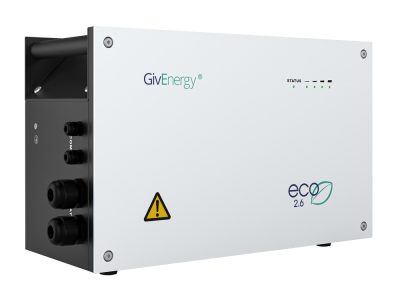
GivEnergy Administration and GivEnergy Warranty: As many customers will already be aware, GivEnergy Ltd entered administration on 9 April 2026. The administrator named in the public notices is Christopher Brooksbank of CB Business Recovery Ltd.
Insider Media then reported on 14 April 2026 that GivEnergy Ltd had ceased trading, that all employees had been made redundant, and that no further hardware warranties, user support or software support would be honoured by GivEnergy Ltd.
At the same time, the position is not completely straightforward, because GivEnergy Ltd sits within a wider group structure. The administrator was not appointed over GivEnergy Software Limited, and there are also other related companies in the group structure, including GivEnergy Property Limited, GivEnergy Group Limited and GivEnergy Commercial Limited. At the time of writing, there is still no further clear public information available regarding the future of the cloud platform, software support, long-term ownership position, or the wider role of those associated companies.
GivEnergy Warranty, MCS and RECC
Customers should be aware that there is a difference between the installer’s workmanship warranty, the manufacturer’s equipment warranty, and the customer’s legal rights against the seller or installer.
Under RECC and MCS-linked consumer protection requirements, workmanship warranties must be insured and must be valid for a minimum of 2 years.
That workmanship warranty relates to the quality of the installation work itself. It is separate from any manufacturer warranty on the inverter, battery or other equipment. RECC also makes clear that manufacturer guarantees sit on top of the installer’s workmanship warranty and the customer’s legal rights in relation to faulty goods.
Where an installer has supplied as well as installed the equipment, the customer may also have rights under the Consumer Rights Act 2015 against the seller if the goods are not of satisfactory quality, not fit for purpose, or not as described. Those rights are separate from any manufacturer warranty.
If an installer has ceased trading, the insurance-backed warranty should cover workmanship issues for the same period as the original workmanship warranty. If the issue is with the equipment itself rather than the workmanship, repair or replacement is normally dealt with in line with the manufacturer’s warranties, unless the customer is pursuing separate rights against the seller under consumer law.
For our own customers, we will continue to support our workmanship warranty obligations and work with customers where genuine issues arise.
GivEnergy Warranty length and how many systems may still be under warranty
Customers should also be aware that GivEnergy warranty terms were not all the same across every product.
From the published GivEnergy documents we have reviewed, some older products had 5-year warranty terms, some documented products had 10-year warranty terms, and some later mainstream residential products, including All in One products and some later hybrid products, were sold or marketed with 10-year or 12-year warranty terms. To check your own warranty, please look in the GivEnergy Cloud and we would suggest taking a screenshot of it for your records.
That matters because GivEnergy Ltd itself was only incorporated in September 2018. In simple terms, that means even the earliest UK-installed systems are still under 8 years old. As a result, many systems sold with 10-year or 12-year manufacturer warranties are likely still within their original stated warranty period, and only part of the older 5-year product base may now be outside stated manufacturer cover.
We cannot give an exact number, because there is no public audited year-by-year install count for GivEnergy in the UK. However, based on GivEnergy’s own claimed market share, the age of the company, and wider UK battery installation growth, our rough view is that there are likely tens of thousands of GivEnergy systems installed in UK homes, perhaps somewhere in the region of 30,000 to 45,000, and that a large proportion of those systems are likely still within their original stated manufacturer warranty periods.
That is one of the main reasons why this administration matters so much to household customers.
Cloud control and Octopus API links
We are not saying that your hardware is about to stop working. However, where a system is relying on cloud-based control, we believe it makes sense to reduce unnecessary reliance on that cloud connection until the position becomes clearer.
If you have set up the Octopus to GivEnergy API control link, we suggest reviewing whether you are comfortable leaving that control in place while the current position remains uncertain.
This is not because there is a confirmed immediate problem today. It is simply a precaution while there is uncertainty around the future of the company and its software platform.
Why we are being cautious about API changes
If the cloud platform or linked API services were disrupted, third-party cloud-based control of the inverter could become unreliable or stop functioning correctly.
In that situation, it may be preferable for the system to be left running in its normal standalone mode, rather than depending on Octopus control through the GivEnergy cloud.
If, and it is a big if, the cloud platform were to stop working altogether, there is a risk that systems relying on API-based control could become more difficult to return to normal standalone operation.
In the past, we have experienced difficulty getting API control fully cleared, and in some cases GivEnergy support has been needed to resolve it. For that reason, we are not actively recommending that customers rush to remove the API link themselves.
Customers should also be cautious before trying to make changes themselves. Insider Media reported on 14 April 2026 that all GivEnergy Ltd employees had been made redundant, so as things stand we cannot rely on normal GivEnergy support being available. We also do not currently know what contact route, if any, is available for GivEnergy Software Limited in relation to the cloud or API side.
That creates a risk that a customer could try to remove or alter the API link and then find there is no effective support available if something does not go as planned, potentially leaving the system in a non-working or difficult-to-recover state.
For that reason, we are not encouraging customers to make rushed changes without first considering the position carefully, carrying out their own research, and seeking appropriate support where possible. If you do decide to try to remove or alter the API control link, that decision is ultimately your own responsibility.
On balance, our present view is that customers should think carefully before making any changes at all. At this stage, unless you are fully confident in what you are doing and understand the risks, we would generally suggest leaving well alone for now and seeing how the cloud position develops.
Our current recommendation
For now, our recommendation is:
- (i) We are not currently recommending that customers remove or alter the Octopus API integration or control link unless they are fully confident in what they are doing and understand the risks
- (ii) Customers should be aware that continued reliance on the API link could become an issue if the GivEnergy cloud or related software services were to be disrupted or disappear
- (iii) In view of the present uncertainty, we believe the most cautious approach is to avoid making rushed changes and to keep the situation under review while the cloud position becomes clearer
Support, updates and communication
We will continue to monitor the situation and let customers know if there is any clearer guidance on support, cloud services or ownership of the platform.
However, we should also be clear that GivEnergy have not provided us with any direct information regarding their position. Midsummer Wholesale published a public statement confirming that it had delisted GivEnergy products and raised concerns around future warranties, support, firmware updates and spare parts.
As things stand, there is no further detailed public information available to us.
Our product approach going forward
As a company, we have always fitted SolarEdge as a premium product, and we have also used Solis equipment for many years.
Going forward, our main preference will be established manufacturers with a longer track record in the market. In particular, we expect to continue using Solis hybrid inverters together with Pylontech batteries as our preferred mainstream storage combination.
The reason for that is simple. Solis, made by Ginlong, was established in 2005. SolarEdge was founded in 2006. Pylontech was founded in 2009. That means all three businesses have been trading for well over 15 years, and broadly around 17 to 21 years depending on brand. By contrast, newer brands such as Sigenergy were only founded in 2022, and GivEnergy itself was a much newer business than these longer-established names.
In plain English, we do not want our customers to be exposed again to the same type of uncertainty that can happen when a newer brand grows quickly but has not yet been around for anything like as long as the more established manufacturers.
Of course, no company is risk-free, and no one can honestly say that any manufacturer could never run into trouble in future. Solis, SolarEdge and Pylontech could also face difficulties one day. However, they have all been in business for many years, they are much more established in the market, and in our view they are a safer and more stable choice than newer entrants. Solis describes itself as established in 2005, SolarEdge remains a long-established NASDAQ-listed public company, and Pylontech has described itself as founded in 2009 and has been recognised by BloombergNEF as a Tier 1 global energy storage manufacturer.
For that reason, our approach going forward is likely to remain focused on long-established manufacturers such as SolarEdge, Solis and Pylontech, rather than newer companies where the long-term track record is still relatively short.
Local monitoring option we are trialling
In light of the uncertainty around cloud-based control, we will also be trialling a dedicated local monitoring and control platform for GivEnergy systems.
At present, this is still at the trial stage. We are testing this as a possible local platform for GivEnergy systems.
The intention is that this may provide:
- local monitoring of the inverter and battery system
- A local dashboard for system status and performance
- A possible fallback option if the GivEnergy cloud disappears or if cloud access becomes subscription-based in future
If these trials are successful, and if the GivEnergy cloud position worsens or disappears altogether, our intention would be to roll this out across our own customer base with GivEnergy equipment.
We should also make clear that this work is being approached cautiously and based on proper testing. In a situation like this, customers should be careful about relying on general YouTube videos, forum posts or informal online advice as a substitute for a properly tested solution.
We may also look at remote monitoring for our own customer base with GivEnergy equipment in future, but that will depend on how the trials go and whether it proves reliable and suitable for real-world use.
We do not want to overpromise at this stage, but we felt it was sensible to let customers know that we are actively looking at practical local alternatives.
GivEnergy Warranty support for our own customers
As a general rule, once a system has been properly installed, commissioned and is running normally, many systems operate reliably for years. That said, inverters and battery systems are still electrical equipment and faults can occur.
If any of our own installed systems were to fail and prove impractical or uneconomic to repair, we do have solutions available and would work with the customer to find the most practical way forward.
We are making that position clear because, strictly speaking, the legal and warranty position after the first 6 months can become more complex depending on the exact fault, the cause, the paperwork and whether the issue is one of workmanship, equipment failure or consumer rights against the original seller. Even so, our aim is to help our own customers wherever reasonably possible.
We believe this demonstrates the difference between our company and some of the lower-cost installers and larger volume national firms in the market. In our experience, we have attended many systems originally installed by other companies to diagnose faults, correct poor workmanship, and help customers with issues that should have been dealt with properly in the first place, including warranty-related problems. Too often, customers are passed from one party to another, given the run-around, or left struggling to get a clear answer. We do not work that way. We take responsibility for our own customers, we support the products we fit, and we focus on long-term reliability and aftercare rather than price alone. We are not the cheapest, but we believe the quality of our work and the support we provide speaks for itself.
Customer letter to the GivEnergy Administrator
We would also ask all GivEnergy customers to consider writing directly to the administrator to request clear answers on warranties, cloud services, firmware support, customer data, intercompany relationships and the events leading up to administration.
We have prepared a Word document template for this purpose. If you wish to use it, please amend it first with your own name, address, contact details and system serial number. This is available for download at the bottom of this web page, together with a rich text version if you do not have Microsoft Word.
The system serial number can usually be found on the side of the inverter or within the GivEnergy app.
We strongly suggest sending the completed letter by Royal Mail Recorded or Signed For delivery rather than by email. An email can be missed, ignored, filtered into junk, or disputed later. A posted letter sent by a signed-for service gives you proof of posting and proof of delivery.
Important disclaimer
This notice reflects our current understanding of the situation as at 16 April 2026 and our own view based on the information presently available. We are not acting as legal advisers, and customers should carry out their own due diligence and seek independent advice where appropriate.
Errors and omissions excepted.
FOR ANY ENQUIRIES, NO OBLIGATION QUOTE OR TO DISCUSS A PROJECT THEN
please click here to contact us